


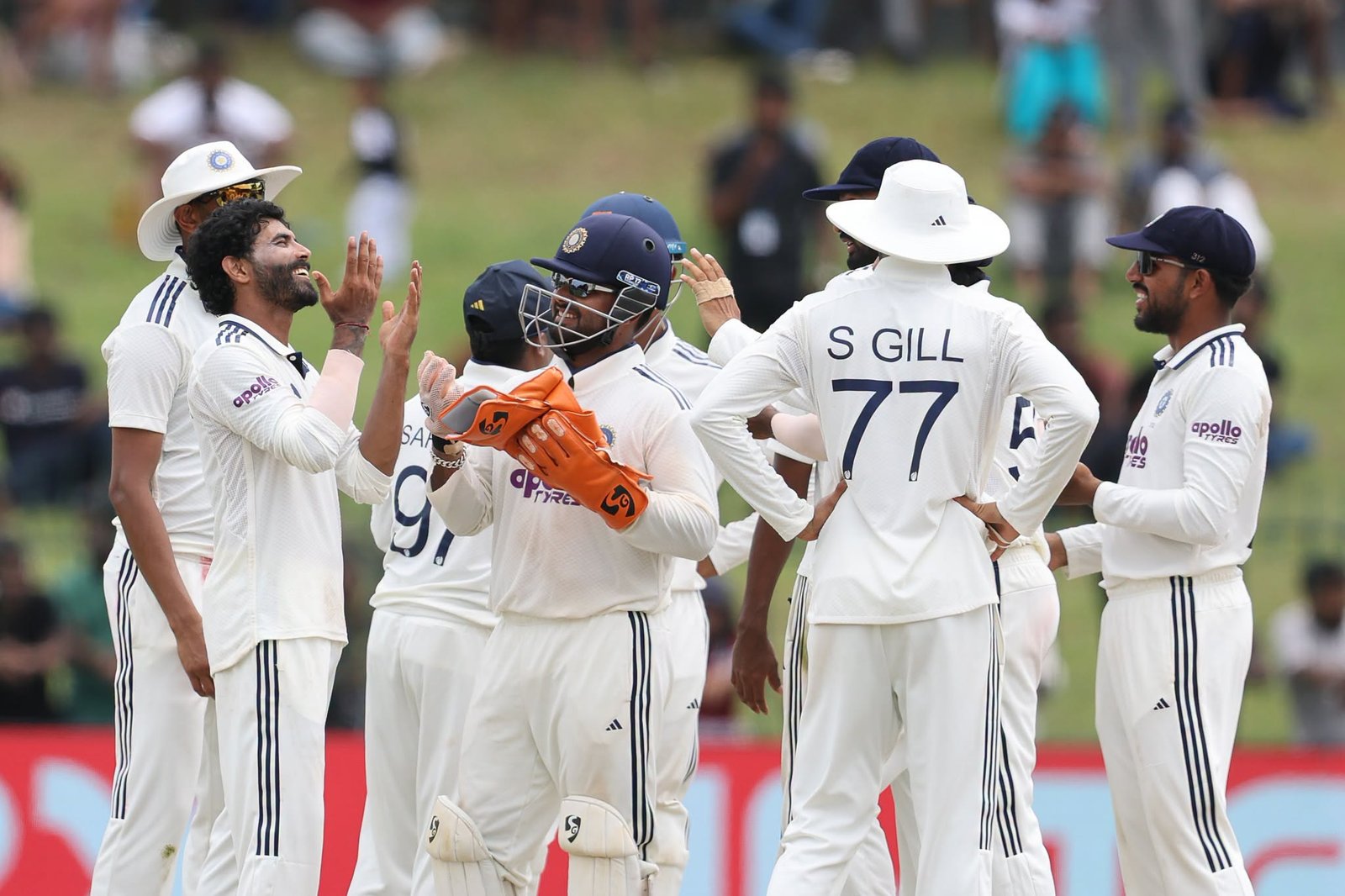
Kolkata, August 31: India completed a 1-0 Test series victory over Sri Lanka after the second Test in Colombo ended in a draw, bringing to a close a campaign that showcased India’s batting depth and bowling resources while also highlighting their inability to convert a dominant position into a series sweep.
India arrived in Sri Lanka with a clear objective: to begin their campaign on the front foot and strengthen their position in the World Test Championship. They achieved the primary goal, winning the opening Test in Galle by 165 runs, but the second match exposed an area of concern as Sri Lanka mounted a determined fourth-innings resistance to deny the visitors a 2-0 victory.
The opening Test established the tone of the series. India controlled the contest for long periods, with their batting unit producing the substantial totals required to put Sri Lanka under sustained pressure. Their bowlers then capitalised, completing a convincing victory and giving captain Shubman Gill a winning start to the series.
Among India’s most impressive performers was Devdutt Padikkal, whose consistency with the bat proved decisive. The left-hander accumulated 328 runs across the two Tests and was named Player of the Series. His 167 in Galle, his maiden Test century, was particularly significant and demonstrated his ability to build a long innings in challenging overseas conditions.
The series also provided encouraging signs for India’s bowling attack.
With Jasprit Bumrah absent, Prasidh Krishna assumed greater responsibility and responded with a disciplined campaign. His ability to generate pressure with the new ball and maintain control through extended spells gave India an important seam-bowling option.
India’s spin department was equally influential. Manav Suthar emerged as the leading wicket-taker in the series, underlining the depth available to India in a department that remains central to their success on the subcontinent.
The second Test, however, followed a very different script.
India appeared firmly in control after declaring on 503 for nine and dismissing Sri Lanka for 290, establishing a first-innings advantage of 213 runs. Gill chose to enforce the follow-on, a decision that reflected India’s confidence and their desire to press for another victory. ri Lanka, however, produced an exceptional response.
Rather than capitulating, the hosts showed remarkable resilience in their second innings. Sonal Dinusha was at the centre of the resistance, registering centuries in both innings and helping Sri Lanka withstand prolonged pressure from the Indian attack.
Sri Lanka eventually reached 429 for nine, ensuring that India could not complete the victory. The draw ended their hopes of a clean sweep but did little to alter the overall balance of the series.